GRIEF AND HEALING
Giving My Painful Emotions a Name Brought a Sense of Relief
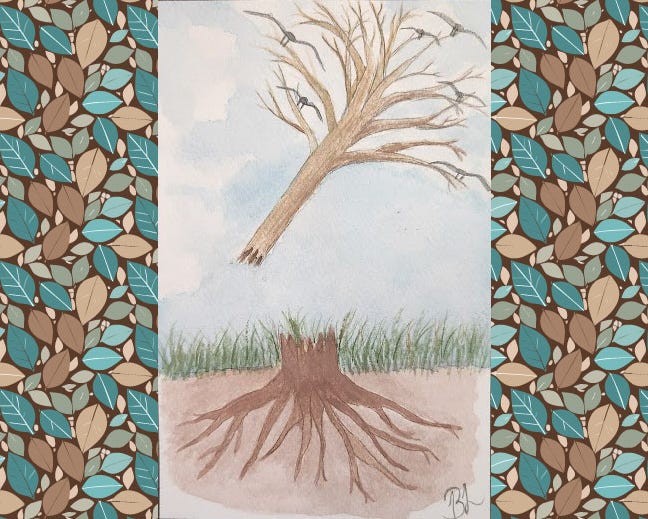
For a decade, I thought losing my father suddenly at 19 was the most challenging trauma I would face. It took work and dedication, but my mother, sister, and I mourned, healed, and continued living.
That was before my mom’s brain cancer diagnosis almost two years ago, stage-4 Glioblastoma Multiforme (GBM). And it was before, two weeks ago, when her doctors informed us she was out of options.
Despite surgery, multiple rounds of chemo and radiation, and a clinical trial, new tumors are forming while the old continue to grow. GBM is almost always a terminal diagnosis. According to the National Brain Tumor Society, “The five-year survival rate for glioblastoma patients is only 6.9 percent, and the average length of survival for glioblastoma patients is estimated to be only eight months.” (NBTS)
Therefore, this news didn’t come as a shock. It wasn’t unexpected. It was an awful inevitability. Our treatment goal was always to “buy her more time” with only a glimmer of hope for a miracle cure.
Although I thought I was mentally prepared for this day, it hit me like a semitruck. Emotions and fears I never anticipated have ambushed me as I make plans to return home, possibly for the last time, and to be with my mom before I have to say goodbye.
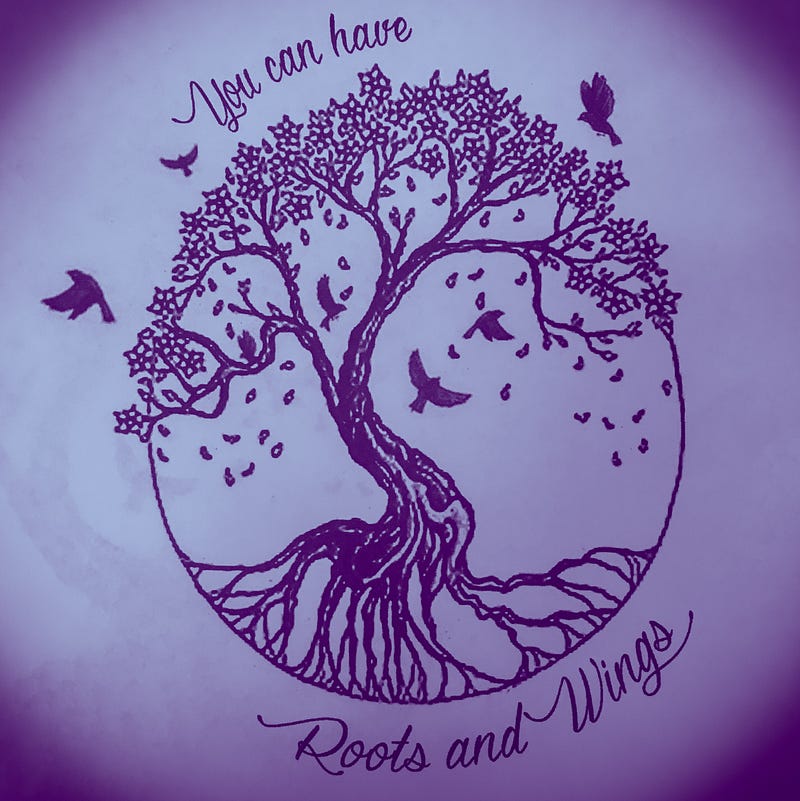
In the past weeks, bombarded by uncertainty and overwhelming anxiety and plagued by terrifying questions, my thoughts continually return to the tattoo on my shoulder.
I got the tattoo in 2016. At the time, I was preparing to leave home on my first extended trip abroad. Despite my lifelong, desperate desire to travel the world, I was hesitant to leave my mom after losing my dad.
I wavered, unsure about leaving the home I had always known and my mom, my best friend. She knew me better than anyone and depended on me. Yet, I wasn’t certain I’d ever find happiness or fulfillment if I never broke free of my small town to explore the world.
As moms do, mine encouraged me, assuring me she couldn’t be happy or fulfilled either if I failed to pursue my passions for her. The tattoo was inspired by the poem Roots and Wings by Denis Waitley, which eloquently expressed my mom’s sentiments and brought me comfort.
Roots and Wings
If I had two wishes, I know what they would be
I’d wish for Roots to cling to, and Wings to set me free;
Roots of inner values, like rings within a tree;
and Wings of independence to seek my destiny.
Roots to hold forever to keep me safe and strong,
To let me know you love me, when I’ve done something wrong;
To show me by example, and help me learn to choose,
To take those actions every day to win instead of lose.
Just be there when I need you, to tell me it’s all right,
To face my fear of falling when I test my wings in flight;
Don’t make my life too easy, it’s better if I try,
And fail and get back up myself, so I can learn to fly.
If I had two wishes, and two were all I had,
And they could just be granted, by my Mom and Dad;
I wouldn’t ask for money or any store-bought things.
The greatest gifts I’d ask for are simply Roots and Wing
— Denis Waitley
Suddenly, however, I feel like my roots are being torn away. And I have been struggling to imagine what life will be like with just wings.
Who am I?
My parents provided the foundations on which I formed beliefs and values. They set examples and taught me lessons that influenced me, making me who I am today.
Thanks to the foundation of values laid by my parents, I’ve been quite proud of the person I was becoming. They taught me to set goals and work hard to achieve them. I was the first in my family to earn a college degree and even went on to complete a master’s degree. I wanted to explore the world. So far, I’ve visited China, Italy, The Czech Republic, The Netherlands, France, Spain, Costa Rica, and Panama. And currently, I live in Colombia.
Even through the trauma of my father’s passing, I uncovered the strength, resilience, and independence I had because they taught me to value those traits.
Currently, I feel uncertain about everything I know about myself. I’m so overwhelmed with grief I can’t imagine achieving anything. I don’t feel strong. I feel scared and helpless. And I don’t feel independent or resilient. I want my mom and dad. Without them, I’m afraid I will lose my favorite parts of myself.
Who will love me unconditionally?
My parents have been my safety net, always ready and willing to catch me when I fall. They’ve been my unfailing motivators, with more faith in me than I often had in myself, assuring me I was capable of anything through hard work and dedication.
I have my own grown-up family, a husband and stepdaughter, but marriages fail every day, and my husband’s support differs from that of my parents. No bond is like that of a parent and child.
The concept of managing the rest of my life without the support of my mom and dad intimidates and terrifies me. I’m left feeling helpless and alone.
Who’s next?
I look back and snicker at my past self, so assured that navigating the trauma and grief of my father’s sudden passing was my life’s odyssey. I found purpose in the horrific experience by seeing it as a trial I had to face to become a complete person.
My mom’s illness has taught me life isn’t that reasonable. Heal from one tragedy, and an even more difficult one will be thrown your way. So now I live in constant terror of what will be next, or more accurately, who will be taken from me next.
Uncertainty plagues me. I’m struck by dark thoughts in my happiest moments, wondering who I’ll lose next.
If I weren’t already married, I don’t know if I’d be capable of committing to building a life with someone. Instead, I live in constant fear my husband will be taken from me if my husband, too. I believe I’d spend the rest of my life alone out of fear of having yet another piece of my heart torn away.
Will I be all alone?
Grief took its toll on my family following my dad’s passing. I haven’t had contact with his side of my family in almost ten years. Differing perspectives, changing dynamics, and the haze of grief clouding out the pain the others were feeling culminated in irreparable damage to the relationships.
This rift caused a sort of grief-PTSD. Losing my mom, I feel, will result in losing my remaining family. After all, I already live on the other side of the world. Without her linking me to my extended family, I’m afraid I’ll lose that connection also.
My relationship with my sister is already strained over differing ideas regarding treatment. If we can’t overcome our resentments and salvage the relationship, that’s it for my connection to my home and childhood. She’s the only remaining connection to who I was once upon a time before trauma and pain changed me irreparably.
The constant anxiety I’ve suffered in the last several weeks started to alarm me. The unfamiliarity warned me it wasn’t simply grief. Reaching my limit and concerned for my mental health, I decided to read and research.
I found comfort in knowledge when I came across the article, Losing both your parents in adulthood: What it actually means to become an ‘adult orphan.
While the term “adult orphan” may sound strange, to me, it felt like a fitting description. Like most, I anticipated outliving my parents, the natural order of life. And, at 33, I am an adult. However, I was in no way prepared to be parentless at this age, at the beginning of my journey into adulthood.
The article brought instant relief. I wasn’t on the verge of crisis. I was experiencing typical symptoms of a recognized condition, Adult Orphan Syndrome.
Reading the common symptoms of Adult Orphan Syndrome, it was as if someone sorted the dark, complex emotions I’d been suffering into an orderly list.
- Questioning of identity
- Resurfacing of past grief
- Feelings of loneliness
They were familiar to many adults who’d experienced the same trauma. Reminded I wasn’t alone, I turned to Medium, not searching for answers but wanting to hear the stories of others who had been where I was.
I was grateful to find exactly that in Elle Becker’s story, I Don’t Want to Be an Orphan.
The feelings haven’t disappeared, and I’m certain there will still be challenges. Nevertheless, naming them and knowing they result from a common, diagnosable syndrome has made them less daunting. And I’m reassured that others have been in my shoes. They’ve managed the same symptoms, healed, and gone on to live healthy, fulfilling lives.
I’ll continue taking measures to ensure I don’t become lost in my grief. I see a psychologist regularly and purchased the book The Orphaned Adult by Alexander Levy, hoping to navigate these challenges in the healthiest way possible.
I look forward to the day I can share reflections on my own healing process. Until then, knowing there’s a well-trodden path to follow through the dark forest of grief and the assurance that there’s a way out provides sufficient relief.
Thank you for reading. I hope you found some comfort in my writing the way I have in reading other writers’ stories.
 BLEW WRITING LLC