Death and dying go hand in hand with guilt and regret. It’s painful and tragic but not insurmountable.

It’s easy to imagine that if a loved one became ill with a terminal disease, you would drop everything and be at their side no matter what. Reality can be a bit more complicated.
For starters, a terminal illness doesn’t mean the patient is dying now, nor does it mean they’re suffering. My mother was diagnosed 20 months ago with Glioblastoma Multiforme, an incurable brain cancer with a median survival rate of just 18 months.
My Mom lives in the US, and I live in Colombia with my husband and stepdaughter. This leaves me in a position wrought with uncertainty. Do I abandon one family for the other? Am I shirking one set of responsibilities for the other? Looking back, how will I feel one day, having chosen to neglect one family for the other? These are the questions and doubts constantly running through my mind.
Even though I manage a great deal of her care from afar, I feel tremendous guilt every day for not being her primary caregiver. I handle all her finances. I complete paperwork, applications, and forms for her care and benefits. I contact doctors for prescription refills and symptom or treatment questions. I ensure her medications, dosages, and appointments are documented and organized. And I attend medical appointments by phone. I can travel to visit her, and I do as often as possible. But it can be costly and logistically challenging. So, I try my best to do everything I can to care for her from afar.
Still, I wonder every day if it’s enough.
In comparison to how some fare, she’s still relatively healthy. She still communicates normally, and she’s mobile. Her short-term memory has been affected, but her long term is intact. She can no longer drive but still goes out to the grocery store and to visit friends and family when she has a ride.
She’s well cared for. She receives disability benefits like home health care, my grandmother lives with her, and she stays with my sister regularly.
The care she requires most is patient reminders of appointments and to take her medications, some light housework, and occasional assistance getting up and maintaining balance. These are all tasks that can be handled by the support system currently in place. Nonetheless, whenever there’s a mix-up or something is overlooked, I feel the guilt and anxiety of knowing it might not have happened if I had been there.
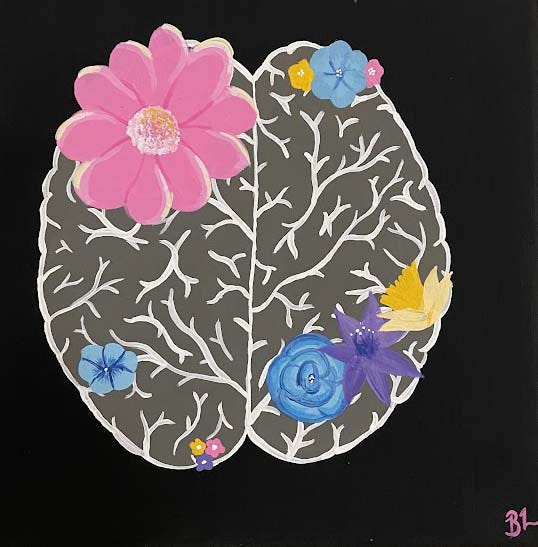
Some would argue I should want to spend every minute with her while I still have her. And trust me, I judge myself harsher than any critic could on that front. But that, too, isn’t as straightforward as it may seem.
As a result of the tumors and treatments, my mom isn’t the same person she was when she was healthy. Her mind works differently. She’s become short-tempered, and her values have changed. Of course, I don’t fault her for this. It’s just another of the horrendous symptoms of a wretched disease. It’s painful to admit, but I’ve had very few positive memories with her since these symptoms began. I haven’t been able to create new cherished memories, and I selfishly worry about the unpleasant interactions that are now commonplace, tarnishing my memory of who she was.
My mom has also always encouraged me to go out into the world and live my life in pursuit of my dreams. And still does. Despite our incredible bond and how hard my moving so far away would be on her, she supported it enthusiastically, even pushing me to go when I would share my doubts and fears about leaving her. She tells me she wants me to have all the happiness I can manage in this life, and she would sacrifice anything to give it to me.
But where does that leave me as a daughter? Am I a bad daughter for not being by her side? Or would I be a bad daughter for going against her wishes, sacrificing myself and my opportunities to be happy and live out my dreams to care for her? I’ve chosen to honor her wish, but that means living with the pang of guilt that will be my constant companion for the remainder of my life.
When you love someone as much as my mom and I love each other, you’d sacrifice anything to bring them peace. So, that’s what I’ve chosen. Unfortunately, in my case, as for many others, I’m unsure if there’s true peace to be found. No good answer. No fitting compromises. Ultimately, you’re stuck convincing yourself every day that you did the best you could with the information you had at that time. And you try your best to be at peace with that.
I sometimes feel if I did make the decision to move home and care for her full-time, my presence would only serve to remind her of her illness and the dire circumstances she’s in.
Generally, her mind downplays her illness. Often, she comments that “she’s fine,” “she’s the same as she’s always been,” or she doesn’t think her symptoms are as bad as we make them out to be. She still makes comments about going back to work, driving again, or living for 5–10 more years.
The reality is that she has had two recurrences, and treatments have failed. Every time a treatment doesn’t slow growth or a new tumor shows up on an MRI, our options become more and more limited.
But why would I want her to understand this? I want her to feel content and maintain her positive outlook. I don’t want to be forced to explain to her daily that I’m there because I fear the time she has left is more likely months than years. I couldn’t and wouldn’t break her spirit in this way. But that means staying away.

Every time she receives bad news, be it a recurrence or an MRI showing tumor growth, I fight the urge to hop on a plane immediately. But I hold back, knowing bad news doesn’t mean we’re out of options and afraid that if I go too hastily, I may be unable to return when she truly needs me.
But what if I’m too late?
The possibility looms that on any given day, she could suffer a stroke and no longer be conscious or able to communicate. She could die. I could miss my opportunity to sit beside her, hold her hand, and reassure her that I’m with her and love her. Even thinking of this breaks me.
Since we talk about everything, we’ve discussed this possibility. Mom assures me she knows how much I love her and that I would do anything to be there. She’s clear that I should never feel guilty if that’s how things play out. Still, in the back of my mind, I know my presence would comfort her and that if I can’t be there, I’ll forever regret not being able to provide her with that one additional moment of peace.
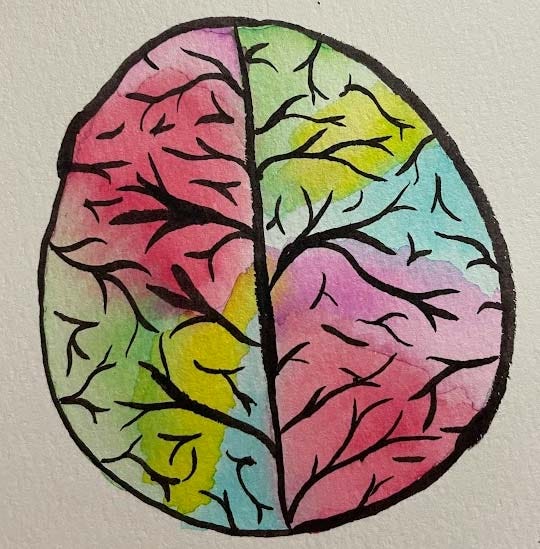
My mind is a scale in constant fluctuation, never finding proper balance. No matter what choices I make, I’ll inevitably look back and wonder whether I made the right decisions. Death, whether sudden or drawn-out, inevitably leaves you with regrets and guilt. This I know from experience.
When I was 19, my father died suddenly in a motorcycle accident. I regretted every fight we ever had, every mean thing I ever said, and every missed opportunity to tell him how much I loved and appreciated him.
For this reason, I also know living at peace with regrets and guilt is possible.
I wouldn’t even say I’ve forgiven myself. I’ve just chalked them all up to a fact of life. I can reassure myself that, in the end, my dad knew I loved him. And I know he wouldn’t want me to live my life punishing myself. So, I go on living for him. I try to accomplish everything I know he wished for me. I try to live in peace and experience happiness, as I know he would’ve wanted. He and my mom made sacrifices and worked unfathomably hard to give my sister and me a good life and opportunities they never had.
So, I will go on. I won’t live in despair or self-pity. I will overcome my regrets and guilt and live the life they worked hard to give me. I’ll make a conscious effort to find and experience joy and pursue my dreams in their honor. And when I succeed, I’ll have them to thank for showing me so much love and support that it endured beyond their physical presence and sustained me for the remainder of my time on Earth.
 BLEW WRITING LLC