EXPAT TERROR
Colombian vigilantes: the good, the bad, and the dangerous
Lying on the hot asphalt, helpless and terrified, with a pistol pointed squarely at my head, I desperately searched my husband’s face, seeking comfort in his expression. I needed some indication that he believed everything would be okay and that he wasn’t as scared as I was. Unfortunately, all I found were my own fears reflected as he lay 2 meters away in the same position, another gun directed at his head.
Frozen in terror, my mind raced but repeatedly circled to a particular thought: Had I been wrong in my resolute defense of Colombia? I’d repeatedly assured friends and family in the U.S. it was a progressive, rapidly developing country, safer, and more transparent than its past reputation. Was I about to become a cautionary tale of the dangers that still exist?
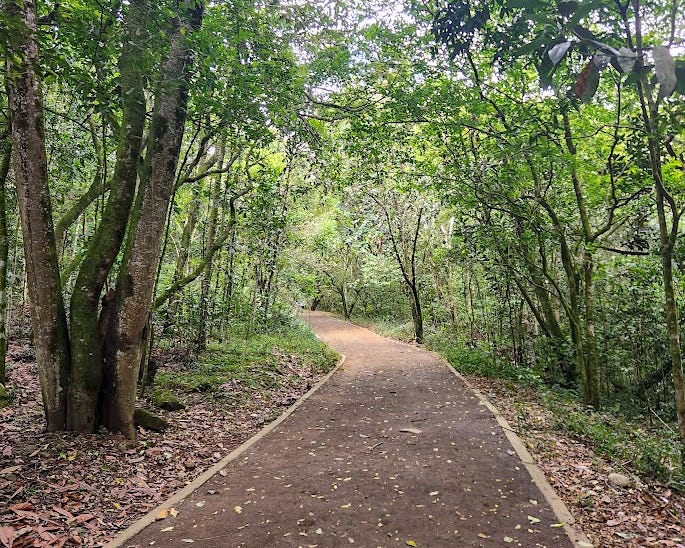
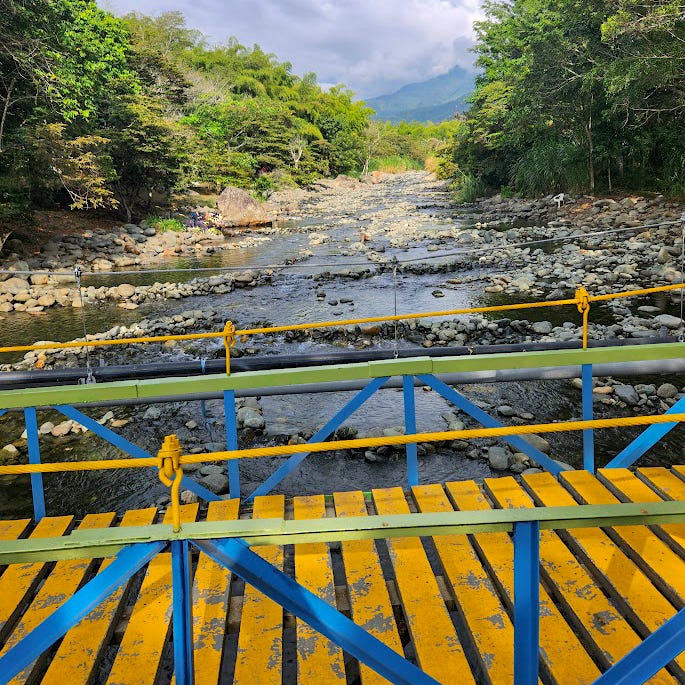
Our day had been idyllic. My husband, stepdaughter, and I set out early that Saturday morning for Ecoparque Río Pance, a nature park just outside Cali, where we live.
My stepdaughter was on a camping trip with her scout troop, so my husband and I decided to take advantage of the short trip to drop her off and enjoy the park ourselves.
Though I’d visited Cali many times, this was my first trip to Pance. We’d only moved to the city a few months prior, so I was excited to learn there was a beautiful retreat so close to our home.
The city offers little daytime relief from the sweltering heat of the dry summer months, so a day relaxing and splashing in the cool freshness of the river came as a welcome opportunity.
My husband and I started the day with a casual stroll down one of the shaded paths. In no particular hurry, we chatted, stopping occasionally so I could ask questions or when I spotted something new and fascinating.
I grew up in rural Northwest Pennsylvania, so I tend to find everything in Colombia new and fascinating. My husband grew up in the city and patiently takes on the role of tour guide for his gringa wife frequently.
The breeze from the Andes Mountain to the west, combined with the shade of the lush foliage and crystal clear river, formed an oasis from the suffocating heat of the crowded city.
We finished our walk at the river bank, where we played like children in the chilly water, splashing each other and building towers from flat rocks.
Afterward, we perched on a large, flat rock, allowing the sun to dry us as our feet dangled in the water.

Like most of Cali, the park offered stunning views of the Andes. So we decided to sketch the magnificent surroundings as we basked in the warm rays.
Once we’d finished sketching, we ended the day sharing an order of delicious fried comida típica, traditional Colombian food, from a small restaurant on the opposite bank. The empanadas, papas rellenas, platanos, marranitas, and cafe tinto were made all the more enjoyable in the park’s relaxed ambiance.
Stuffed and happy, we decided to head home. A decision that would completely change our memory of this day from peaceful to traumatizing.
Exiting the park, we debated whether calling an Uber or taking the bus back to the city would be faster. Standing on the sidewalk, we requested an Uber in the app but kept an eye open for passing taxis.
We had little luck with the app and had just given up and decided to cross to the bus stop when a silver car that had been dropping off other park-goers pulled up and asked if we needed an Uber.
This may sound risky, and in many ways, it is. Without using the app, there’s no log of your ride, GPS tracking, pre-determined price, or electronic pay, all of which bring certain risks. However, it isn’t an uncommon practice in Cali. Uber drivers will stop for someone who appears to be waiting without luck to hail a taxi since many don’t have access to a cell phone for one reason or another.
We hesitated only momentarily while my husband asked about the price of taking us to our neighborhood before accepting the ride. We’d gone less than a kilometer when a police truck passed us with its lights flashing and continued down the road out of sight.
When we turned off the main road onto a secondary street, we again spotted the police truck, lights still flashing. It appeared to have pulled over a couple of motorcycles parked alongside the street ahead of it.
I was in the back of the car, and my husband rode in the passenger seat up front. He chatted with the driver, so I nosily watched the police from the rear window after we passed.
Just as I was turning back around in my seat, I happened to see the police officer bolt around the rear of the police truck at a sprint; as the truck pulled away, the passenger door fully opened.
At first, I chuckled and said loudly enough for my husband to hear, “I think that truck is rolling away.”
By the time he processed what I had said and turned around, the driver had leapt into the truck and slammed the door.
At this point, I noticed the motorcycle drivers speeding ahead of the truck, which was gaining momentum.
“Oh my god,” I proclaimed, “I think they’re running from the police.”
I watched as the motorcycles, followed by the police, closed the distance between us and them.
“Get down! On the floor!” my husband shouted at me. Confused and scared, I followed his directions as best I could. Colombian cars tend to be quite compact, so I could only lie on the seat with my arms over my head.
Helpless, I implored my husband to get down as he stared out the rear window. From his position in the small passenger seat, he couldn’t have hidden well if he wanted. The driver, a young man a few years younger than us, looked to my husband for direction, pleadingly asking what he should do.
My husband took charge. He told the driver to slow a bit and let them pass but keep moving.
From my position, arms wrapped around my head, I couldn’t see. I could only hear the motorcycle engines growing louder, telling me they were nearly beside us.
There was nothing more we could do. Despite my husband’s calm demeanor as he gave instructions, I perceived a look of helpless terror on his face each time he glanced backward.
Helpless and blind to whatever was occurring outside the vehicle, I recalled horror stories my husband had shared of drive-by assassinations. Innocent bystanders, unfortunate enough to have witnessed a crime, were brutally murdered to avoid their potential ability to testify.
The roar of the moto’s engines told me they were right beside me. I trembled, terrified that each thought would be my last, while silently praying they’d pass quickly. These thoughts were interrupted by a banging on the rear driver’s side window at my head.
I sat up quickly with a shriek as the motorcyclist fiercely pounded on the car while angrily shouting at us to pull over.
I screamed back, “NO!” and could only imagine the look of sheer dread in my eyes, pleading with the man to leave us be. He continued shouting to pull over despite our objections. He drove forward, reaching in and punching the driver, who had been unable to close his window quickly enough as he sped up.
At this point, it was clear these men had only sinister intentions, and our next moves would likely save or end lives.
The driver shoved back at the man on the bike with one hand while continuing to steer with the other.
My husband ordered him to drive faster. We needed to escape them and allow the police to catch up. The truck hadn’t kept pace with the motorcycles and was inexplicably far behind.
The driver listened and accelerated quickly. Like us, he was unfamiliar with the roads and turned randomly in an attempt to outrun our pursuers.
The small car was outmatched, however. Soon, the other moto pulled up alongside my husband, throwing wild punches at him through the window.
The driver swerved to force the motos away. But no matter how many action movies you’ve seen when you’re in the same circumstances, you wonder what you’d be found guilty of if you killed one of these men, despite the threats and assault.
Our driver’s erratic swerving had brought us some distance, and the motorcycles fell behind.
The driver again asked my husband what to do, and my husband repeated that we just had to buy time to let the police catch up. Our random turns had put us on a winding road. The police were no longer in view.
So we continued.
At one point, we reached a roundabout, speeding around it quickly. The motorcycle again pulled alongside the driver, who instinctively swerved toward him, making contact with the motorcycle.
Most vividly, I recall my stomach flipping at the sound of a gunshot too close for comfort. Finally, my husband shouted, “There! police!” as we approached an intersection blocked by two police vehicles.
We sped towards them and slammed the brakes, stopping as close as possible.
Approximately five seconds of glorious relief overcame me. The men couldn’t kill us here, surrounded by police. We were saved.
My relief was cut short when the police rushed our vehicle, gun drawn. My stomach sank at the sight of a police officer pointing a pistol at my husband’s head through the car window.
On the other side of the vehicle, more police aimed pistols and shotguns at our driver.
However, as the police peered in the windows, their confusion was evident. They barked orders to put our hands up and instructed my husband and the driver to exit the vehicle and get on the ground. I was to stay in the car.
I was terrified for my husband. While Colombia has come a long way in recent decades, tales of corruption were too commonplace to comfort me at that moment.
Yet something about the interaction told me it was going to be okay. The police didn’t appear angry or scared for their own lives; they looked relieved and a bit confused.
Soon, another armed officer approached me and instructed me to leave my bag, exit the vehicle, and lie on the ground. I followed his orders precisely, though I attempted to lie as near my husband as possible.
During this entire interaction, my husband, the driver, and I shouted questions and explanations: “What was happening?” “What had we done?” “We just left the park.” “Why were we being treated like criminals while the men on the motorcycles stood by undetained shouting taunts and obscenities?”
The police said to wait. We would have our chance to speak.
I can’t even list every terrified thought that passed through my head in the moments I lay there on the ground. Was this some sort of cartel kidnapping? Would we be robbed? Would I be raped? If this was simply a police misunderstanding, I was reasonably certain I would be treated well and shown the undeserved respect of being an Americana in Colombia, but was my husband safe?
As they checked us and the vehicle for weapons and found none, they began letting their guards down, sharing pieces of what had occurred.
There had been a robbery at the construction site where we’d initially passed the police truck. The robbers were apprehended there. However, their two male accomplices in a grey car, like the one we drove, hadn’t been.
My husband tried explaining, telling them we’d just left the park. At first, he included the driver until I caught his attention and reminded him we had no idea who this driver was or what he had done before picking us up. Although the driver appeared as confused and terrified as we were, picking us up could have been a convenient cover for all we knew.
One policeman who seemed to be in charge allowed me to get up and stand off to the side with the police. I did as I was told and was treated more respectfully than my companions, as expected. Given the opportunity, I again tried to explain we had no idea what was going on and had just left the park when we were suddenly being chased by the men on the motorcycles, who we thought were running from the police. He reassured me it would all be sorted, and we just had to wait.
I stood there and helplessly watched, panicked, as my husband and the driver were handcuffed and led to the police truck. I clarified that they would not be taking my husband anywhere without me. Oddly enough, this worked, and I was allowed to collect my husband’s backpack and join them in the back of the police truck, unhandcuffed, at once relieved and disgusted.
We had no idea where they were taking us or what we were in for. Again, my fears of robbery, rape, and murder resurfaced. Despite my compassion for his blatant, fearful expression, I was still uncertain if I even trusted the driver.
Two policemen joined us in the truck and told us we were going to the construction site where everything could be cleared up.
My husband asked what the accomplices looked like and was informed they were two dark-skinned males in a silver car.
I was flabbergasted. First, something like 90% of all vehicles in Cali that aren’t taxis or Jeepetos (tricked-out jeep trucks that carry rides to the mountains) are silver. Second, we were two light-skinned males and a white gringa with purple hair. Nobody with a good enough view to describe the accomplices would forget to mention the purple-haired gringa in the back!
Now, I understood the police’s expressions of relief and confusion upon first approaching the vehicle. They, too, knew we weren’t the criminals they mistook us for.
When we arrived at the construction site, we were asked to exit the police truck. By now, we more or less understood the ridiculous purpose of this trip: to allow the witness to confirm that it was not us who he saw drop off the would-be robbers.
I was in utter disbelief. Although we didn’t fit the description, I was sick with worry. What if this supposed “witness” was in on the robbery and would point the finger at us?
Fortunately, this wasn’t the case. He confirmed we weren’t the accomplices he had seen. The cuffs were removed, and we were free to go.
We were so relieved to have the matter straightened out and be permitted to leave that we momentarily forgot to voice our own serious concerns about how the matter had been handled.
As we gathered ourselves, one of the men on the motorcycles approached us with a weak apology for the mix-up that came along. He also added some unsolicited advice that we shouldn’t have run. Haughtily, he asked, “Why were you running from the police?” We responded practically in unison, “We weren’t running from the police. We were running from you.” My husband took this opportunity to share the experience from our perspective while the police stood by listening. You aren’t police. You were shouting at and punching us. Why would we stop for you? What authority do you have?”
This time, more sincerely, the vigilante offered his apologies as a police officer endorsed what my husband had said.
This experience highlights a very complicated issue in Colombia that isn’t unrelatable to an issue we face in the U.S. “Vigilantism.”
Colombia has a history of police corruption tied to political corruption and instability in the past. There have been many instances of bribery, pursuing their own agendas, and even simple incompetence resulting from a lack of training and education requirements. One result of this has been a thriving “vigilante” culture.
To English speakers, the term brings to mind Spiderman or Batman, and in theory, these vigilantes are attempting to take on a similar role, protecting those whom the police cannot. In reality, however, this has led to a complicated system where civilians feel entitled to take police work into their own hands.
This can get extremely complicated and dangerous, as we experienced firsthand.
Few realize we have vigilantes in the U.S. Any neighborhood watch group is, in effect, taking police work into their own hands to protect their neighborhoods. Here in Cali, there is a somewhat similar system. Networks of vigilantes protect most residential and commercial blocks in the city.
These are typically retirement-aged men who still need or want to work. These men tend to be very friendly and helpful. I recognize each vigilante on our block, and they greet me with a pleasant, cheerful good morning or good evening when I pass. They know all the residents on the block and can be seen patrolling the street, socializing with the residents, sweeping up litter, and giving directions to delivery drivers.
I will say, though, the first several times I saw one of these men walking towards me at night with a machete on his hip (the typical weapon of the trade), I was quite astounded and momentarily believed I had fallen into a horror film.
These vigilantes depend on the monthly “donations” of the block residents as their salary. I don’t believe they do much crime-stopping other than dissuading criminal mischief by their sheer presence. However, I personally feel safer when they are around, and I enjoy knowing they look out for me as I walk the dog or head to the bakery for the morning bread.
As all Americans familiar with the case of Trayvon Martin know, however, this sense of responsibility and authority, without proper training and actual authority, can have severe and even deadly consequences.
Trayvon Martin was a 17-year-old African American boy walking through a Florida neighborhood on his way home from a trip to the convenience store on February 26th, 2012. In short, a group of men acting as vigilantes to “protect” their neighborhood decided that the young black boy looked suspicious and was likely responsible for a series of robberies in the area. They chased him down in their truck and fatally shot the unarmed boy. These men let their bias and presumption of guilt decide the fate of this innocent young man.
In my general experience, neighborhood vigilantes are nice old men who feel a sense of duty to watch out for and help the residents of their block. However, vigilantism is not limited to these “neighborhood watch” men. There are many instances of average civilians taking “justice” into their own hands, as in the case of our false identification as robbers.
These are typically people without training who see themselves as the police, judge, and jury. I first witnessed this type of situation when I saw a few men in our local park harassing a homeless man and escorting him from the park.
My first reaction was to ask my husband what the homeless man was doing that they were removing him with such hostility. I had seen this man sleeping or drawing in the park many times and greeted him multiple times as I passed him. He was a regular and never seemed to be a nuisance or a threat. I was afraid I had misjudged him, and he was perhaps injecting drugs, exposing himself, or harassing people.
My husband explained he was probably doing nothing. These men saw him there, didn’t like it, and decided to take matters into their own hands. He explained that there were stories where men in a similar situation had gone even further, beating or “disappearing” homeless people.
Thankfully, for any concerned, the homeless man returned to the park the next day, and I continue to see him regularly, never causing problems.
Vigilantism is clearly problematic. I shudder to think how differently our story could have ended had we made one wrong move, had I not been a white American, or had our pursuers been armed. Yet, I can imagine the desperation of civilians who don’t feel protected by the police. I have no answers, but I can say, from my own terrifying experience, that Colombia is in a confused state when it comes to enforcing law and order and that it is essential that those traveling there are aware of the potential circumstances that can result.
Thank you for reading! For another crazy encounter in Cali, check out this story about the time my husband and I got into a fistfight with a cab driver.
 BLEW WRITING LLC