Part 1: To be, Ser, and Estar tips from a former Spanish teacher

Years of thinking about language and attempting to simplify concepts to put them into terms teenagers could understand have helped me understand them and explain them better. Below, you will find my concise (as possible) explanation of how to understand ser and estar by better understanding “to be” in English.
Conjugations of the verb to be are some of the most prolifically used words in any language. This is evident in English because it uses a single verb (be) to express many concepts. In contrast, Spanish has two verbs, ser and estar. Each is used in distinct ways to express many concepts translated as conjugations* of “be” in English.
*conjugations are variations of the verb depending on the subject or tense. For Example: I am, You are, We were
While it may seem like a pain to learn the conjugations and proper usage of two verbs instead of one, once you understand these verbs, it makes a great deal of sense to use this more precise language.
After all, what does it mean “to be” something? Think about the following sentences and ask yourself how similar the information is that they relay:
- The car is red.
- The book is on top of the table.
- I am depressed.
- I am a teacher.
- It is raining.
- It is Wednesday.
- We are family.
Don’t worry if you can’t immediately determine what makes these sentences different. Before teaching ser and estar, I couldn’t have described it well myself. However, after reading the brief lesson below, you should be able to spot and explain the differences easily.
To be in English
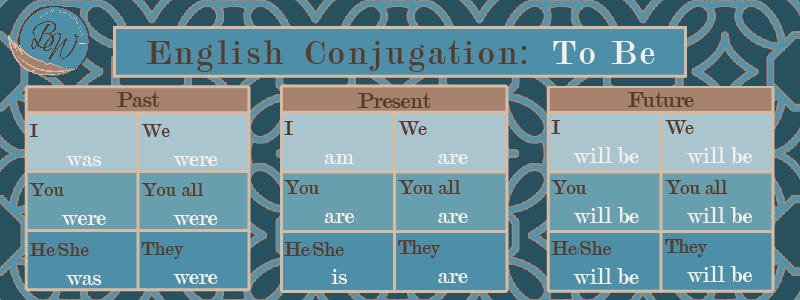
Conjugating “to be”
The verb “to be” can be difficult for English Language Learners (ELLs) to memorize initially. This is primarily because the conjugations vary significantly according to tense.
Also, the conjugation variations among subjects seem quite random. For example, in the past tense, the first-person-singular “I” and the third-person-singular “he/she/it” use the same conjugation “was.” However, in the present, they are different. “I” uses am, and “he/she/it” uses “is.”
The Present Progressive
In English, the verb “to be” is used prevalently. In addition to the simple past, present, and future tenses in the charts above, to be is used to describe an ongoing action in the present progressive tense.
- He is studying.
- They were cooking.
You can even use “to be” twice in the present progressive using the gerund (being).
- You are being very annoying today.
The Perfect Tense
Lastly, you can use the past participle (been) with the auxiliary verb “have” or “has” to form the perfect tense.
- I have been stressed all week.
- She has been an excellent student all year.
To be in Spanish
Both ser and estar are irregular verbs in Spanish, meaning they don’t follow the typical conjugation pattern for verbs ending in -ar or -er. As much as my students hated this answer. The best way to learn them is simply to memorize them.
Tip: As a student, I kept an index card with the conjugations I was learning as a bookmark and would look at them often to review them or quiz myself.
Nowadays, I recommend keeping a picture or screenshot on your phone. If you want to get super nerdy, make it your background. That way, you see it often and can review it regularly until you have memorized it. Then, switch it out for another verb or tense.
Ser Conjugations
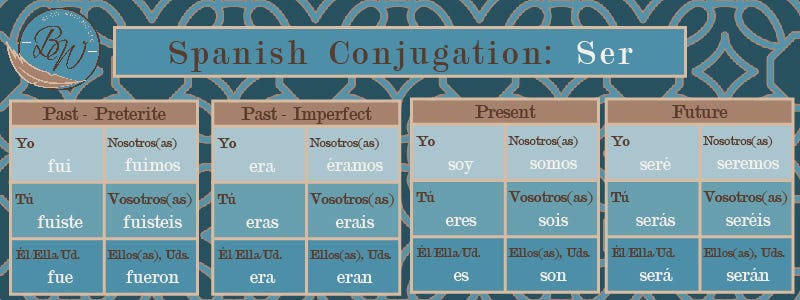
Examples:
- El carro es rojo. — The car is red.
- Es Miercoles. — It is Wednesday.
- Soy profesora. — I am a teacher.
Note: the Spanish auxiliary verb used for “have” or “has in the present tense is haber. You can learn more about haber in the article linked below on “to have.”
Estar
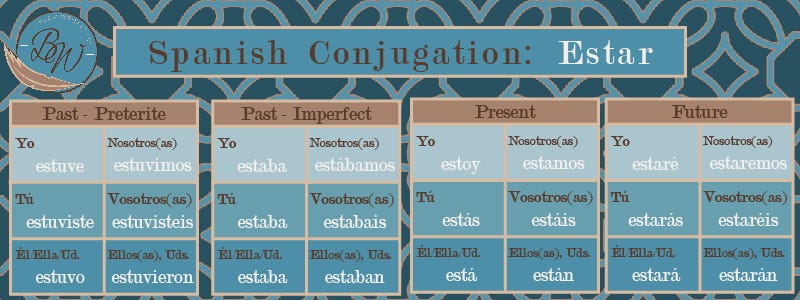
Examples:
- El libro está encima de la mesa. — The book is on top of the table.
- Estoy deprimido. — I am depressed.
- Está lloviendo. —It is raining.
Other Forms of Ser and Estar
The present progressive and the perfect tense get a bit more complicated when it comes to ser and estar. This is because they use participles and gerunds in addition to simple verb conjugations.
These are the Present Progressive and the Perfect Tense. Check out the article below for more information on Ser and Estar in these situations.
Choosing Between Ser and Estar
While memorizing the conjugations of two different verbs may seem challenging, the real confusion for English speakers begins when they’re midsentence and must decide between ser and estar.
When I first learned ser and estar, I recall being told ser is used for more permanent descriptions or traits and estar for more temporary.
Later, I learned the following acronyms, which was a game changer for me. The usage rules become much clearer by remembering D.O.C.T.O.R. for ser and P.L.A.C.E. for estar.
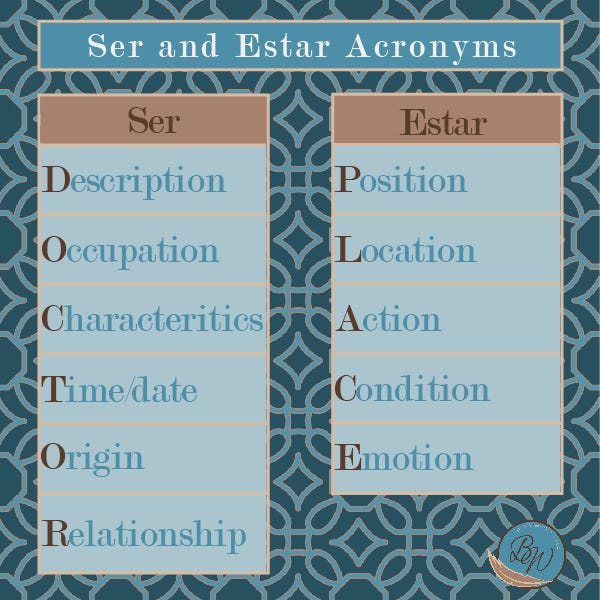
D.O.C.T.O.R.
As stated above, an often repeated “rule” is that “ser is used for permanent traits.” However, this “rule” has too many exceptions for me. People’s personalities change, the time changes every 60 seconds, and I can change the house’s color by painting it. These examples of exceptions, given to me by former students, demonstrate precisely why, in their words, “the temporary permanent rule sucks.” And that’s why I prefer D.O.C.T.O.R.
Description
To describe physical traits like size or color, always use ser.
- Ella es alta— She is tall.
- La casa es grande. — The house is big.
Occupation
Occupation. Job. Profession. Whatever you want to call it, it uses ser. It’s important to mention that even though they don’t get paid, being a student is considered a job and therefore uses ser in Spanish.
Note: English uses the articles “a” or “an” for jobs. However, Spanish doesn’t. This can be a hard habit to break, but you will sound more fluent once you do.
- Soy cocinero. — I am a chef.
- Nosotros somos estudiantes. — We are students.
Characteristics
Characteristics, or intrinsic traits such as kindness or bravery, also use ser. Some students would get preoccupied with whether something is a description or a characteristic. However, it doesn’t matter for our purposes as long as you know they both use ser.
- Ella es amable. — She is friendly.
- Estas clases son dificiles. — Those classes are difficult.
Time/Date
When asking about or giving the time or the date, use ser. You will also only use es or son. Note: When giving time, es is only used for one o’clock in Spanish because it is the only singular number. The rest of the hours use son.
- Es la una y media. — It is one thirty.
- Son las diez de la mañana. — It is 10 in the morning.
- Es sabado, el 30 de Diciembre. — It is Saturday, the 30th of December.
Origin
Origin refers to where something or someone is from or its nationality. Both use ser.
- Él es Colombiano. — He is Colombian.
- Ella es de los Estado Unidos. — She is from the United States.
Relationship
Relationships can refer to those between people or things here. For example, “She is my sister” refers to the relationship between two people, me and my sister. However, “That book is mine” refers to my relationship with the book. The book belongs to me. It is my possession.
- Ella es mi mejor amiga. — She is my best friend.
- Nosotros somos familia. — We are family.
- La silla roja es de usted. — The red chair is yours.
Tip: To remember, D.O.C.T.O.R. goes with ser. Just remember, “doctor” is an occupation, and occupations use ser.
P.L.A.C.E.
“How you feel and where you are, always use the verb estar.”
This is another pneumonic device often employed by Spanish teachers. It is a catchy way to remember the uses of estar. However, it’s less thorough than the acronym P.L.A.C.E.
Position
Position typically refers to where something or someone is located in reference to something or someone else. Similar to ser’s “description” and “characteristic,” it isn’t necessary to be clear whether a sentence refers to a noun’s position or location. Just remember they both use estar.
- Vaso está encima de la mesa. — The glass is on top of the table.
- Ella está detrás de la casa. — She is behind the house.
Location
Location is simple. Use estar to describe where a noun is.
- Nosotros estamos en casa. — We are at home.
- Los papeles están alla. — The papers are there.
Action
Action is a clever way to refer to the present progressive explained above. Estar is always the auxiliary verb used to describe an ongoing action.
¿Estás trabajando? — Are you working?
Los perros están comiendo. — The dogs are eating.
Condition
Condition is a temporary state. For example, how you are feeling or if something is broken.
- El horno está roto. — The oven is broken.
- Estoy lista. — I am ready.
Note: This is where the “temporary/permanent” rule does make sense. The meaning of a sentence can change completely depending on if ser or estar is used.
For example, “Estoy enfermo” and “Soy enfermo” both translate to English as I am sick. To be more specific in English, you’ll need more words. “Estoy enfermo.” means “I am currently sick.” or “I am feeling unwell,” whereas “Soy enfermo.” means “I am a generally sickly person.” or “I am prone to illness.”
Emotion
Emotions can be considered conditions. Emotions, after all, are temporary states of feeling. Yet again, the distinction isn’t relevant so long as you know they both use estar.
- Nosotros estamos tristes. — We are sad.
- ¿Cómo estás? — How are you today?
Note: Like conditions, you can completely change the meaning of a sentence by using either ser or estar. For example, “Estoy triste” means I am currently sad. Whereas “Soy triste” means I am generally a sad person, perhaps clinically depressed. However, both can be translated literally to English as “I am sad.”
Tip: To remember, P.L.A.C.E. goes with estar. Just remember “a place” is a location, and locations use estar.
Tener
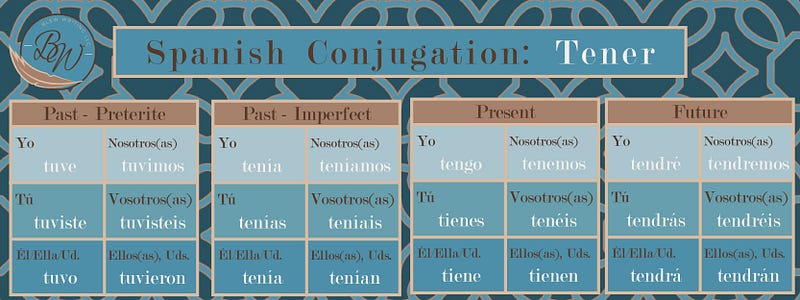
It’s important to mention that there is an entire list of adjectives that don’t use ser or estar but are translated to English as forms of “to be.” These adjectives instead use Tener “to have.” Here are a few examples:
- Tener frío/calor. —To be cold/cold.
- Tener hambre/sed. — To be hungry/thirsty.
- Tener sueño. — To be tired.
For more on “have,” check out this article about the verbs Tener and Haber.
Conclusion
While it may take a bit more effort to learn two verbs and their usage rules in the beginning, I’m personally a fan of Spanish’s different way of thinking about “being,” here’s why:
You are sick.
No reader, not you. But think about how many meanings this phrase can have in English without a tone of voice or additional details to clarify my intended sentiment.
- I could be accusing you of being a “dark/twisted” person.
- I could be accusing you of being ill.
- I could be disgusted by something you did.
- I could be agreeing with your former claim of being ill. (Maybe you just threw up.)
- I could simply be informing you that you are ill.
Much of the English language is vague. It requires more for meaning to be truly understood. On the other hand, in Spanish, you can be more precise simply by choosing a different verb.
It’s Precise. It’s Concise. It’s fun.
I hope that you found this explanation useful. Feel free to leave follow-up questions in the comments.
 BLEW WRITING LLC