How my mom took a tragic loss and turned it into something beautiful.
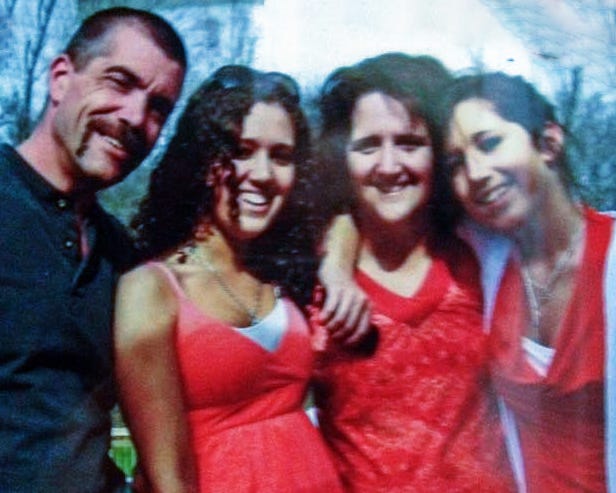
Parents dealing with the death of a partner, I’m here to tell you, your children understand, or one day will, that what you’re going through is incredibly hard, you weren’t prepared, and you don’t know what you’re doing. They don’t need you to be perfect, but they’ll love you and appreciate you forever for trying to be.
I say this with confidence because I’ve been the child watching my Mom struggle, trying to figure out how to be everything we needed. While simultaneously processing her own grief.
As an adult, I understand a bit better the pressure she must have felt. She was solely responsible for how my sister and I handled our tragic loss and how it affected the rest of our lives. For better or for worse, our accomplishments or struggles would be attributed to her alone.
My mom had no time to prepare, no education in child psychology, and not even a similar experience to draw upon. Her decisions were made decisions on pure instinct. Yet, reflecting on the loss of my father almost 14 years later, I’m amazed by her.
The decisions she made following my dad’s death have had profound, positive impacts on our lives ever since. I’m so grateful for her unconditional love and strong mother’s intuition.
I’m sure she made mistakes and decisions she regrets. But when I look back on that time, all I see are the things she got right.
She assured us he loved us more than anything. She was always available to talk, even when she didn’t have answers. She reminded us how the things our dad taught us would help us be okay.
One choice she made stands out to me now. Not only because of how it helped us through the tragedy of losing our dad. But because of its positive impact on our lives ever since.
My mom told us we were a team. And from that day on, we took on the world together.
I was 19, and my sister was 17 when our father passed. We weren’t young children but we were still far from adults. I vividly recall sobbing into my mother’s chest, telling her, “I wasn’t ready to not have a dad. I still needed him. He wasn’t done raising me. He still had things to teach me.”
My father died suddenly in a motorcycle accident. He was headed home on his motorcycle when a car backed into the road in front of him from a hidden driveway.
I pulled into the driveway the evening of his accident, and my mom approached the car from the porch stairs where she’d been waiting. She told me there was a motorcycle accident less than a mile down the road. She wanted to go make sure it wasn’t him.
She said it was because she wanted to tell my dad, “This is what happens when you’re out on your bike and don’t check your phone. I had to go make sure it wasn’t you in an accident.” to demonstrate why he should check his phone more often. An old-school car guy, tech wasn’t his thing. He often forgot he even had a cell phone.
I was surprised because she wasn’t normally a person with a flare for the dramatic. And because, despite what she said, I could see the worry in her eyes.
As we approached the accident, I spotted his Harley on its side on an embankment. I barely had time to spit out, “Oh my god. That’s his bike.” When the fire chief approached us and said, “The ambulance just left. He’s on his way to the hospital. He’s badly injured, and he was never conscious, but he was alive when he left here.” Words that would haunt my memory for years. Along with my mother’s response, “Who?” She was in shock, unable to understand what seemed clear to me from the sight of my dad’s crumpled bike and what this man was saying.
When we arrived at the hospital, they took my mom, sister, and me into a private room to explain his injuries: numerous cuts and bruises, a broken arm, collar bone, tibia, nose, and ribs. Most concerning, however, was the traumatic brain injury. He hadn’t been conscious since the collision.
We spent the next eight days in the ICU, comforted by family and friends as we waited for a miracle and learned about the brain. Grey matter and white matter. Increased intracranial pressure. Recoverable abilities. Cortexes and Lobes.
On the eighth day, with no visible signs of brain activity, we were asked to make the decision. Would we send him to a long-term care facility where he could potentially live years but would likely never regain consciousness? Or would we discontinue care, allowing natural death?
These days in the hospital are the first times I remember my mom explaining that we were a team. She told us we would be included in every decision. She wouldn’t make these big decisions that affected all of our lives for us. We were old enough and intelligent enough to speak with the doctors, ask questions, and have opinions. So, she would make the decisions with us. As a team.
This was the day I stopped being a daughter and a sister. Instead, I became a member of a team. A family of three strong women.
It may seem like a lot of responsibility and pressure for young adults. Looking back, I sometimes feel sorry for my younger self, faced with such responsibility at such a young age.
I can see why some parents choose to shield their children and carry the burden themselves. However, I resent life for handing me such hardship. I’m grateful to my mom for giving me a semblance of control over it.
Mom could have made the decision to take him off the life-sustaining machines on her own. But if she had, she’d have likely spent years questioning whether or not she’d made the right decision. At some point, my sister or I may have questioned her choice as well. Our dad would have been “taken from us.” Instead, we had a voice and decided together to “allow him to pass and be at peace.”
By giving us a say in the decision-making, she demonstrated her faith in us. I felt proud she believed I was strong, responsible, and intelligent enough to be part of the process.
I also felt proud I was able to share the burden and help my mom. Since she, too, was suffering. If it had been one of us alone, we’d have never left my father’s bedside to sleep or grab a meal from the cafeteria, too afraid of missing an update or change.
As a team, we could share the burden. We rotated shifts sitting at my dad’s bedside, spending time with the constant stream of visitors in the waiting room, and practicing self-care.
At 19, with input from my mom and sister, I wrote my father’s obituary. That memory still stands out in my mind. It was a heartbreaking task. Yet, I felt proud. I was able to contribute. To take something off my mother’s plate. Use my skills to take on a difficult adult task.
The teamwork mindset continued when we finally left the hospital. There were so many decisions to be made and questions to be answered. Funeral arrangements. Cremation or burial. What to do with his life insurance. What to do with his belongings. How to handle our grief. Each task was taken on together.
My mom loved to say, “We’re a team. Three strong women getting shit done.” She would remind us that our father’s life’s mission was to teach us the value of hard work, responsibility, strength, and independence. And that now was the time we would need it.
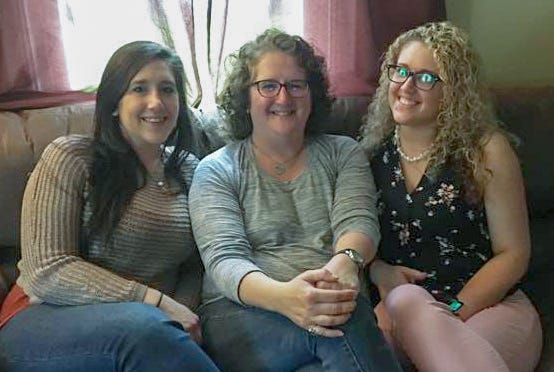
The norms my mom established during this difficult period have continued over the years since. I find it nearly impossible to make a decision without first seeking their input. Even now, as an adult with my own family.
No matter what I go through, I know I have two dependable team members who have my back no matter what. I trust them explicitly to give advice and opinions with only my best interest at heart. And I trust them to carry the burden when times are tough. And tough times have come again.
In February of 2022, my mom slipped on the ice. Fearing a broken nose, she went to the hospital to get checked out. But her whole life changed when the CT scan revealed not a broken nose but a brain tumor.
She was diagnosed with Stage 4 Glioblastoma Multiforme (GBM). GBM is a particularly horrendous form of brain cancer. Extremely fast-growing and resistant to treatment, “the average life expectancy for glioblastoma patients who undergo treatment is 12–15”(Glioblastoma Foundation).
Once again, we entered into team mode. Together, we’ve handled the diagnosis, a craniotomy, chemotherapy, radiation, recurrence, a clinical trial, more radiation, a second recurrence, new medication, and more chemotherapy.
We research, discuss options, make decisions, and cry together. When one of us needs support, the others are there to bolster them or pick up their slack.
As mom’s symptoms have progressed, her memory has deteriorated, her impulsivity has increased, and she suffers bouts of confusion. Leaving it up to my sister and me to run the team.
However, thanks to her past decision to make us a team, she’s shown my sister and me our capacity to handle tough times and impossible decisions. And mom’s team mindset has continued to guide us.
My mom created this team. She taught us what it meant to work together and support each other. She told us we were strong. That we could do anything together. By helping us through that tragedy, she gave us a roadmap for how to handle this one. Along with the confidence to know we can.
Younger children may not be able to handle the level of responsibility my sister and I took on. But, I urge parents to consider letting them take on some responsibility and become part of the team. As tempting as it may be to protect their innocence and shield them from the scary parts of life by placing all the burden on yourself, in my experience, there are many benefits to letting them face reality with you there to guide and support them as part of their team.
 BLEW WRITING LLC