This thought persisted in the years since losing my Dad and resurfaced with my Mom’s cancer diagnosis.

My husband and I met seven years after I lost my father in a tragic motorcycle accident, yet he calls me a happy person. He says it’s one of the many reasons he loves me. Before he mentioned it, I’d never given much thought to that aspect of my personality, but I’ve come to realize he’s right.
I am a happy person. I try to make every day happy, even when everything goes wrong. I don’t fall to pieces. I simply try to overcome the unpleasantness and salvage as much happiness as possible. And I’ve learned that is likely a direct result of what I have been through. Still, happiness isn’t what it was before.
Although I still feel happiness, how I experience it and the role it plays in my life has changed. It’s no longer the simple uninhibited joy I experienced when I was young, pre-loss and hardship.
Likely because of the age at which I lost my Dad, 19, I vividly remember feeling happiness as a child. I can still recall the elation of finding a new bike under the Christmas tree. I remember shedding tears of joy the day I came home from school and found my Mom holding our new puppy. I can relive the memory of shrieking jubilantly while jumping up and down with my sister after reading my admission letter to my top choice of universities. These were moments of pure joy, uncorrupted by sadness or worry.
I no longer anticipate happy memories without also anticipating the moment of sadness that is sure to accompany them.
In a conversation with my Mom after my Dad’s passing, I told her, “I just feel like I’ll never be just “happy” again. For the rest of my life, when I feel happy, there will always be this sadness lurking in the background because Dad isn’t there.”
Perhaps it’s a self-fulfilling prophecy, but that’s precisely how it’s played out. In the years since my Dad died, my sister graduated high school, I received two college degrees, I accomplished my lifelong dream of traveling to many exotic places, my sister gave birth to my amazing niece, and I got married to an incredible that man my father never had the chance to meet. And on each of these big, important, happy occasions, I cried because my father should have been there.

I now mentally prepare myself for a happy day. I anticipate the moment when the sadness will spring up so I can experience it without feeling overwhelmed and destroyed. I acknowledge it, allow myself to feel it, and then release it so I don’t miss out on feeling the joy.
On the day of my wedding, the moment occurred as my Mom and I talked while dressing for the ceremony. We had our special mother-daughter talk, where she told me how happy she was for me and how proud she was of my drive, determination, and achievements. Telling me I deserved all the happiness in the world. And that she was so grateful to be with me on a day when some of that happiness was realized.
At that moment, I fell apart. I knew it should have been both of them there with me. Even though I was incredibly grateful to have that moment with my Mom and for her kind words, sadness and grief were also present. My Dad was missing out on this special day, and my Mom had received a diagnosis of glioblastoma multiforme, a brain cancer with a median survival rate of 18 months, just seven months prior.
Thoughts about happiness have resurfaced recently as I’m coming to terms with my Mom’s terminal diagnosis. What future, joyful moments will be tinged bittersweet by her absence?
How do I maintain my happy light when life keeps trying to dim it, shrouding it with veils of sadness and loss?
At times, it’s been hard to reconcile my “happy” persona with the hardship I’ve faced in the past and am currently facing. In fact, there have been moments I’ve experienced guilt and questioned my emotional well-being for feeling happy.
I’ve worried there was something broken within me to be capable of feeling happy when sadness and grief seemed more “normal,” “appropriate,” or “acceptable” emotions.
In books, movies, and television, a person suffers a horrible loss and goes into a deep depression. They disconnect from their friends and family, lose their job, turn to drugs and alcohol, or self-destruct in some other way.
What kind of person suffers a horrible loss, picks up the pieces, and eventually feels happy? Was I a narcissist? Was I masking my pain? Was I incapable of feeling?
I asked myself these questions, but eventually, I realized I wasn’t abnormal or unhealthy. I was actually healing and handling my grief in a healthy way. Healthy healing just isn’t dramatic enough for movies or books.
Logically, I understood living in misery is no way to go through life. But I truly felt it was okay to be happy when I thought about what my Mom and Dad would want. They’ve always been silly, goofy, and realistic people. They wouldn’t expect or want me to spend the rest of my life depressed and miserable. And absolutely wouldn’t want me to miss out on a single moment of joy life offers me.
When I contemplate how I can consider myself and be perceived by others as a happy person, the most sensible conclusion I can draw is that my experiences have given me a greater appreciation for the value and importance of happiness in daily life.
It’s not that I am always happy. I’m human, after all. But in general, I prefer contentment and peace and dislike stress and drama. Yet I know all too well that, like it or not, life will send hard times, losses, and tragedies our way.
When these hard times come, it will be natural and normal to feel sadness, grief, guilt, and other negative emotions. And it’s okay and healthy to feel those things then. But I won’t welcome them unnecessarily into my everyday life.
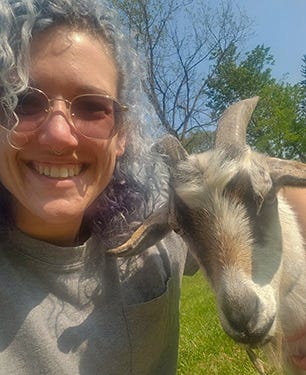
In my day-to-day life, I choose to appreciate peace, wonder, exploration, humor, and excitement. I strive to have as many happy days as possible, knowing the sad days will surely come on their own. I don’t run from feelings of sadness when they come, but I don’t seek them out or invite them in.
My husband, an amateur philosopher, is partial to the Buddhist perspective on emotions. He’s commented that emotions aren’t negative or positive. Every emotion has value and should be experienced and appreciated for the insight it brings.
I truly appreciate this philosophy. And when sadness inevitably comes, I try to remember it. I do my best to appreciate how negative emotions enable me to understand myself better and gain insight and empathy for others. Still, I’ll always choose a happy day over a sad one.
Each day, I choose to wake up and do my best to make the day a good one. Even when the shadow of sadness is lurking about, and sometimes because it does, I choose to seek out happiness at every opportunity and genuinely appreciate each time I encounter it.
 BLEW WRITING LLC