How I have learned to cope with loss and appreciate what I still have as GBM symptoms take their toll on my Mom.
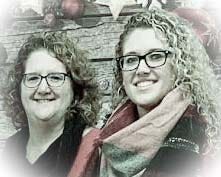
Medical conditions affecting the brain, such as brain tumors, Alzheimer’s, and dementia, have a unique ability to inflict trauma on loved ones. These diseases not only take the loved one in the end, but before they do, they take little pieces of what made them who they were. Until one day, you realize the person who remains hardly resembles the person you love so much.
What is a caregiver or loved one to do? If I had a friend who changed over time from a thoughtful, reliable, and kind person and became flaky, irritable, and unsympathetic, I would probably tell them, “You’ve changed, and I don’t want to be your friend anymore.” I would miss the person they used to be, but I would be relieved to no longer be around the person they became.
When these changes occur to a loved one resulting from an illness, obviously, this type of reaction isn’t an option. The instincts for self-preservation and grief remain, but as caregivers, we are forced to find ways to cope with them. And I know well that is easier said than done.
Over the last 19 months, I have watched my Mom, my best friend, confidant, best advice giver, and #1 cheerleader, slip away little by little. I miss that Mom every single day. Nevertheless, I have tried to find ways to gain perspective and grieve this loss in a healthy manner while still appreciating what I still have. I hope that by sharing a bit of my experience, I can help others facing similar circumstances to find a bit of peace as well.
My Mom was diagnosed with GBM (Glioblastoma Multiforme) 19 months ago. During these months, she has experienced two recurrences despite her very successful resection of the first tumor. She has undergone a standard-of-care round of chemo and radiation, a clinical trial involving medication and re-radiation, and is presently trying a new chemo regimen. Still, she has four tumors in her brain, one of which has tripled in size in only the last six weeks.
Brain tumors can cause a wide array of symptoms depending on their location in the brain. Some of the most common symptoms, according to Hopkins Medicine, are:
- Headaches
- Seizures or convulsions
- Difficulty thinking, speaking, or finding words
- Personality or behavior changes
- Weakness, numbness, or paralysis in one part or one side of the body
- Loss of balance, dizziness, or unsteadiness
- Loss of hearing
- Vision changes
- Confusion and disorientation
- Memory loss
Mom’s tumors have thankfully remained small, wreaking very little havoc on their own. The treatments meant to eradicate the tumors, on the other hand, have taken with them bits and pieces, and sometimes even large chunks of her personality with them. The parts that made my Mom the shy, funny, kind, loving, and thoughtful person I have known all my life.
Mom’s tumors are in the frontal/temporal region of her brain. Physically, she has only suffered slight physical issues, such as leg weakness, headaches, balance issues, and hair loss.
Her most disruptive symptoms have been neurological changes. Her behavior and personality, memory loss, confusion, and impulse control have all been affected at various times and in a variety of ways.
Before cancer, Mom was the best example of what a mother and grandmother should be. Her happiness hinged on the happiness of my sister, my niece, and myself. Becoming a grandma was the highlight of her life. After losing my father unexpectedly in 2010, she finally saw that life could be joyful again with the birth of my niece in 2019. She was determined to spend every second she could with this beautiful little miracle she was given.
Mom would also readily admit she was very self-conscious. She didn’t enjoy going out or sharing too much on social media because she was afraid of the judgments of others. This wasn’t her favorite attribute, so she made it her mission to ensure she taught my sister and me to be proud and confident. And those who know me personally can verify she was highly successful in this endeavor. I can confidently admit that I, in fact, could use a bit more humility.
My Mom was also always present and available to my sister and me. She told me many times that when her kids looked back on their lives, she just wanted them to know without question they were loved. Personally, I lived with my Mom well into adulthood because she was the best roommate I could imagine.
Our mother-daughter relationship bloomed into a cherished adult friendship. Even when I finally did move away, we still spoke multiple times daily via calls and texts. I couldn’t imagine making any decision without first getting her opinion.
Now, because of the toll brain cancer has taken on her, I find myself missing the person she used to be and searching for a glimpse of her in the woman who remains. It breaks my heart. In some ways, she has lost many of my favorite pieces of who she was.
Some changes are so slight most casual observers wouldn’t even notice or would chalk them up to the stress of dealing with cancer. Those who know her well and spend more time with her, though, understand the fundamental changes that have occurred.
Mom struggles daily with memory and confusion issues. Her short-term memory has been affected much more than her long-term. She frequently texts or calls the wrong person or sends messages that don’t make much sense.
She texted me one day saying, “Good morning, I love you. I hope you guys are having a wonderful weekend,” on a Wednesday.
Her most frequent confusion issue has been waking up and getting ready for an outing that isn’t for several more days. Recently, she went on vacation to visit my aunt in Florida. She was staying for ten days, but on the third day, she woke up and started packing her bags for her flight home, believing it was that day.
Luckily, despite their sad implications, we can often laugh about these incidents afterward. When she forgets a birthday or fails to ask how the first day at a new job went, though, it can be disheartening and disappointing.
The most brutal change for me has been that the mother I knew, whose obsession with her kids used to drive me crazy, hardly calls and rarely asks about my life. Some of this can be attributed to her memory and confusion issues, as well as her struggles with impulse control and inhibitions. Our personalities are defined by so many obscure brain functions that it’s nearly impossible to pinpoint which brain functions make us who we are.
I recently moved abroad with my husband. I still handle day-to-day paperwork, calls, and tasks for Mom. I attend medical appointments virtually and travel back and forth regularly to ensure she is well cared for. This move was a big decision and meant a lot of significant changes in my life. I was in a new country with a new home, career, and role as a stepmom.
My Mom seldom asks me about my life here, though. Several times when I have sought out her advice or support, she quickly loses interest or starts telling me about something that happened to her. This is dramatically different from how she would have been pre-cancer.
The thing is, I can’t fault her for it. I remember my “real Mom,” and I can probably even guess with surprising accuracy what advice she would have given me. Still, the process of accepting I don’t have that person anymore has been excruciating.
I have cried to my husband on many occasions, trying to explain how badly I miss my “real Mom” and how I feel terrible for mourning a person who is still alive. I do allow myself time to pity myself and grieve every now and then. Most of the time, though, I try to remember three essential realizations that changed my perspective and made it easier to handle the changes in Mom’s personality.
First, I remind myself that Mom has it a lot worse than me. When I pause, put myself in her shoes, and consider her struggles, I realize I can’t even fathom what she is going through.
I know she gets upset when she feels confused and knows those around her are frustrated because she has forgotten something or acts differently. Yet, she is without recourse, unable to control it, and sometimes not even understanding it. Yet still, she is trying her best every day to fight the overwhelming odds of a terminal illness.
She is fighting for every minute of extra time she can spend with us. I can’t feel too sorry for myself when I see what she is putting herself through for us. That selflessness I can easily recognize and is 100% the Mom I have always known.
Mom has told me more than once that she isn’t afraid of dying. She’s afraid of leaving us to go on without her there to make it better. When we lost my Dad, we all experienced firsthand how difficult death is on the living. She isn’t giving up primarily to gift us with as much time as possible before we are forced to experience that pain and grief for a second time.
The second thing I remind myself is that while my Mom has changed a great deal, I can still pick up the phone anytime, call her, and hear her voice. I know all too well that one day, I will desperately wish for that possibility. To this day, I would give anything to talk to my Dad again or feel his embrace. Many times, when I am feeling bad for myself or sad about our situation, I will call her just to remind myself that I still can and to appreciate the sound of her voice telling me she loves me.
The final and most challenging realization was that it was up to me to adjust my own expectations of her. In the beginning, I was hurt or disappointed by interactions like those I described. Accepting these changes in Mom as a symptom of her disease and adjusting my own expectations when interacting with her has made it a lot easier to cope with the disappointment when she doesn’t respond or act as I would have wanted or expected her to. And every once in a while, a tiny glimmer of the Mom I knew shines through, taking me by surprise.
Recently, I was sitting in the park, stressing over my new writing job and wondering if I had what it takes. Randomly, I decided to call Mom. I had adjusted my expectations accordingly, so rather than expecting comfort, encouragement, advice, or support, I was just hoping she would take my mind off my troubles.
I started sharing with her some of my doubts and fears, and when I said, “I just hope I can actually do it,” without missing a beat, she responded, “Well, of course, you can. When have you ever set a goal for yourself and not achieved it? You will be just fine.” I instantly began sobbing in the middle of the park because that was exactly what Mom would say and exactly what I needed to hear at just that moment.
 BLEW WRITING LLC