
My husband, a native Colombian, would often refer to Pennsylvania as flat. To which I typically responded sarcastically by pointing to a large hill and asking what the hell he was talking about. I had a hard time accepting this description because, duh! We have mountains! My childhood summers revolved around mountains and lakes. Not a single summer passed when I was growing up, that my family and I didn’t go camping in the mountains. And in the long, cold winters, I was a ski club member, and where did we ski every weekend? Mountains!
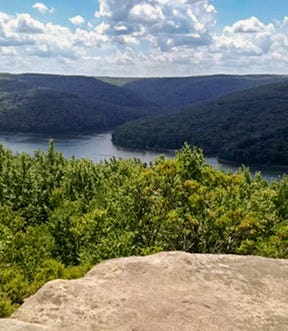
The Mountains of Pennsylvania
And as is usually the case, I am correct (sort of… mostly). The Appalachian Mountains cut through the center of Pennsylvania, dividing the state into East and West. This is a crucial delineation for anyone from PA (Steelers, Pirates, Penguins👍🏼/ Eagles, Phillies, Flyers👎🏼).
The East
In the East, the Pocono Mountains serve as a popular city escape for Philadelphians looking to escape the hustle and bustle (and, let’s just say it, violence) of the city. Instead, they prefer to take in the fresh air and tranquility of the mountains.
The West
The Allegheny Mountains serve the western, more rural part of the state. Since these country folk have about all the peace and quiet they can handle, the mountains here serve as a venue catering to their obsession for all their outdoor hobbies (aka redneck shit, sorry, you can take the girl out of the country, but. . .). This includes space to camp, boat, hunt, fish, ride ATVs and snowmobiles, and much more.
I know from experience these mountains are beautiful and wild. It isn’t uncommon to see wildlife such as coyotes, bobcats and even bears on a camping trip in the Allegheny Mountains. As someone who has enjoyed a great deal of time there, skiing, camping, boating, hiking, and fishing, I must say there are, in fact, mountains in PA. However, moving to Colombia has taught me that there are mountains, and then there are Mountains.
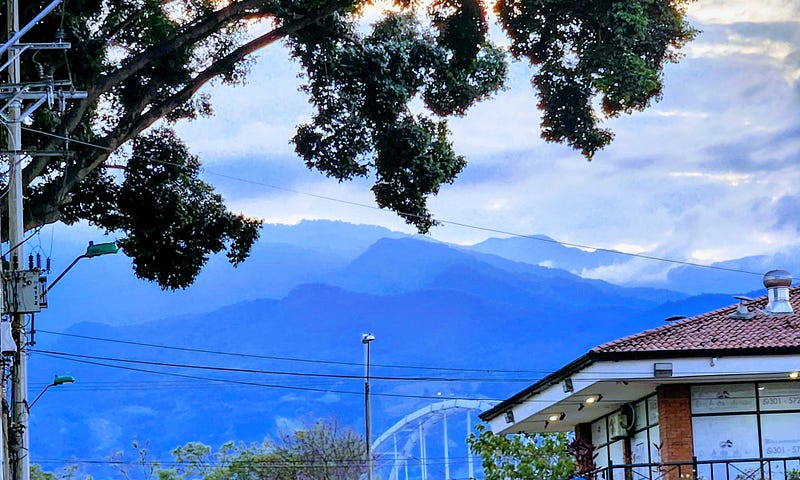
The Mountains of Cali, Colombia
Not a day passes when I am here that I am not awe-struck by mountains here in Colombia. They are captivating! I mean, seriously! They are the Andes Mountains, kind of a big deal. My father always said two things could hypnotize a person for hours: a campfire at night and the ocean waves. I am going to amend this list by adding the mountains of Colombia.
I can spend hours gazing upon the ever-changing mountainscape. It may be because I had never lived quite so close to any capital M, Mountains, but I never considered how breathtakingly different the view can be each time you look at the same mountain range. A slight change in perspective, cloud cover, precipitation, or time of day grabs your attention anew and leaves you gawking, mesmerized by the novel beauty. I’m pretty certain that my husband, who grew up in this city and is all too familiar with the view, is tired of hearing me gasp, “Oh wow, look at the mountains!” However, he, too, has a profound appreciation for their exquisite grandeur.
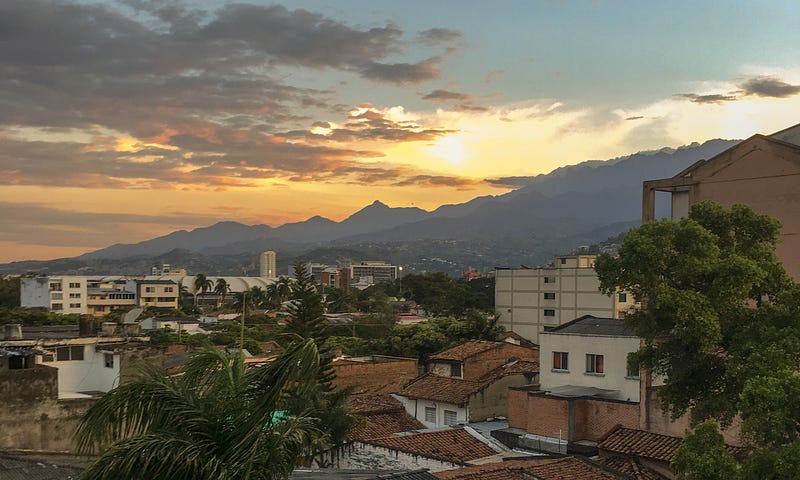
mountains and Mountains
Unable to stop my mind in its quest for knowledge. I needed to know how these two sets of vastly different geological formations could both be referred to as “mountains.” Researching the differences between the mountains of PA and the mountains of Colombia made me nostalgic for middle school Earth Science class and completely blew my mind! The main difference between the two sets of mountains is, believe it or not, time!
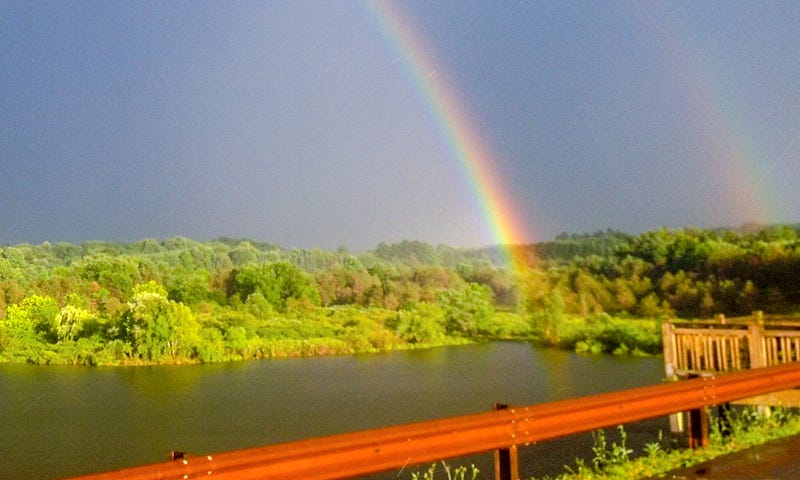
Formation of the Appalachian Mountains
The Appalachian Mountains were formed by the collision of the North American continent with AFRICA! 480 million years ago! During the formation of Pangia (the supercontinent!) This is so incredible. But, admittedly, probably less so for those who paid better attention in said middle-school science class.
For those non-Pennsylvanian readers. Pennsylvania sits nowhere near the current fault line and is, most definitely, nowhere near Africa!
The Appalachian Mountains were originally closer in size and appearance to the Rocky Mountains of the Western United States. (A.K.A. large and pointy) Over millions of years, they have been worn down from precipitation, erosion, and glaciers to the rounded, rolling mountains seen today. Even knowing this, it is hard to imagine they ever resembled anything like the Rocky Mountains.
Formation of the Andes Mountains
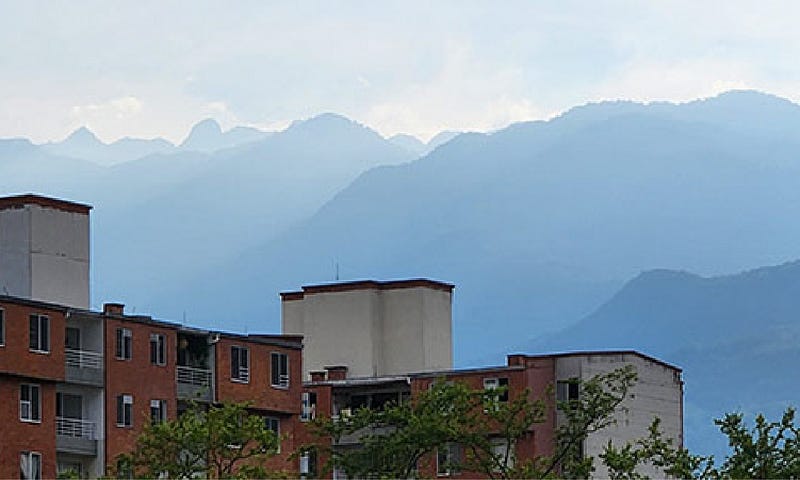
“Los Farallones de Cali” is the breathtaking view I am awed by daily when I walk out of the house. Los Farallones is a mountain range that is part of the West Andes. The Andes Mountains run through Colombia from North to South. There are three cordilleras (mountain ranges) within the Andes in Colombia: the Eastern, Central, and Western cordilleras.
The western range, where you find the Farallones, varies in altitude from about 1,500 meters (4,921 ft) to 3,960 meters (12,992 ft). It also separates me from the Pacific Ocean. The Pacific Coast is only about 100 kilometers (62 miles) from Cali, but incredibly difficult to traverse, thanks to the mountains.
The Andes Mountains were formed by the same type of tectonic plate shifting that formed the Appalachian Mountains. In this case, however, it was the shifting of the oceanic crust under the South American plate.
One significant distinction between the Appalachian and Andes mountains is that the Andes mountains contain several active volcanoes. The Northern Volcanic Belt is the section located in Colombia and Ecuador.
The other notable difference is that the Andes Mountains are mere babies compared to the Appalachians, at only 50 million years old.
Mountains, the Unsung Victims of Ageism
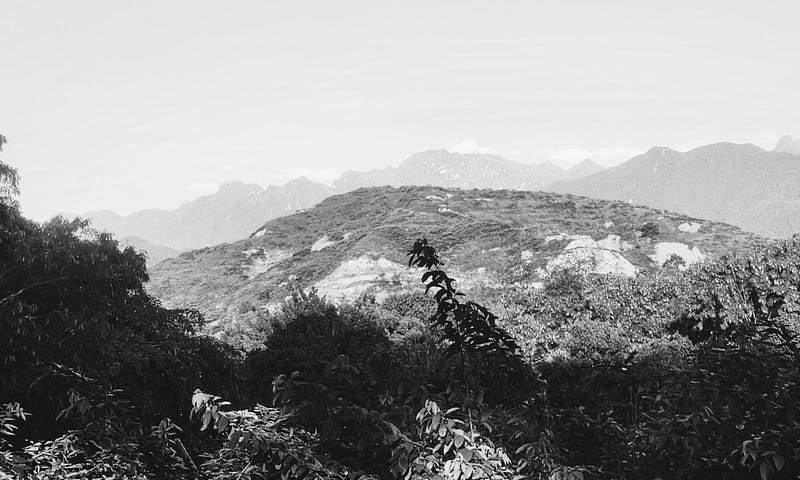
As with so much else in modern society, one must admire the beauty and sharp figure of the youthful Andes. Their high, jagged peaks inspire images of an unexplored fantasy world, at least for this Appalachian Hillbilly. They have already inspired so many of my photos, drawings, paintings, and even this piece of writing. It is no wonder they have inspired many great authors and artists, such as Gabriel Garcia Marquez, a Colombian Native and father of the Magical Realism genre.
That said, however, I am glad I took the opportunity to learn about the incredible history of the Appalachian Mountains of my Pennsylvania motherland. Though age has taken its toll, wearing her down and rounding her figure. One can’t help but respect her age and wisdom. And I, for one, will always see those rounded, voluptuous hills as the welcoming, comforting, and maternal bosom of home.
 BLEW WRITING LLC